Why Your Bra Started Hurting After 60
Bras that fit fine for forty years suddenly don’t. There is a structural reason for that, and it has almost nothing to do with weight, age, or “letting yourself go.”

Ask a woman over 65 what the best part of her day is, and a surprising number will give you some version of the same answer.
Not dinner. Not the phone call from the grandchildren.
The moment she walks in the door and takes her bra off.
If you just nodded, you already know the feeling. The reach behind the back, the unhook, the exhale. Some women say they have been counting down to it since about three in the afternoon.
That is not laziness, and it is not vanity. It is a signal. And for most women, it gets read completely wrong.
“It must be me”
For years the standard explanation has been some polite version of you.
You gained a little weight. Or lost a little. You should get remeasured. You are at that age. You need a better bra. A more expensive one, a properly fitted one, one from a specialty shop with a woman holding a tape measure.
Many women quietly reach a conclusion less kind than any of that: my body has become a problem to solve.
Almost none of that is the real story.
What actually changed
Here is what is genuinely different, and it is worth understanding, because it explains nearly everything else.
After menopause, as estrogen declines, the firm glandular tissue in the breast is gradually replaced by softer fatty tissue. The volume may not change much. The number on the tag may not change at all. But the structure underneath does. It becomes softer, and it settles differently.
This is not damage and it is not decline. It is what breast tissue does, in every woman, on schedule.
The trouble is that a bra is a rigid piece of engineering fitted to a shape that no longer exists.
93%. In a 2013 study of postmenopausal women, 93% were wearing the wrong bra size. Not because they had stopped paying attention, but because the body changed and the bra drawer didn’t.
Two other things shift at the same time. Skin gets thinner and marks more easily. Hands and shoulders get less cooperative. Nearly half of women aged 65 to 74 live with arthritis, according to the CDC, which is exactly why a row of tiny hooks in the middle of your back stops being a minor annoyance and starts being the hardest part of getting dressed.
So the tissue softened, the skin thinned, and the reach got harder. Meanwhile, the bra stayed exactly the same.
Your bra didn’t stop working because something went wrong with you. It stopped working because it holds all of you in four small places.
Your bra holds you in four places. That is the whole problem.
Two shoulder straps and a band that grips hardest at your sides. Four narrow strips of fabric, each about an inch wide, carrying everything.
A traditional bra: all the weight, four narrow points. Two shoulders and two sides take the entire load, which is exactly where the grooves, the red lines and the digging show up.
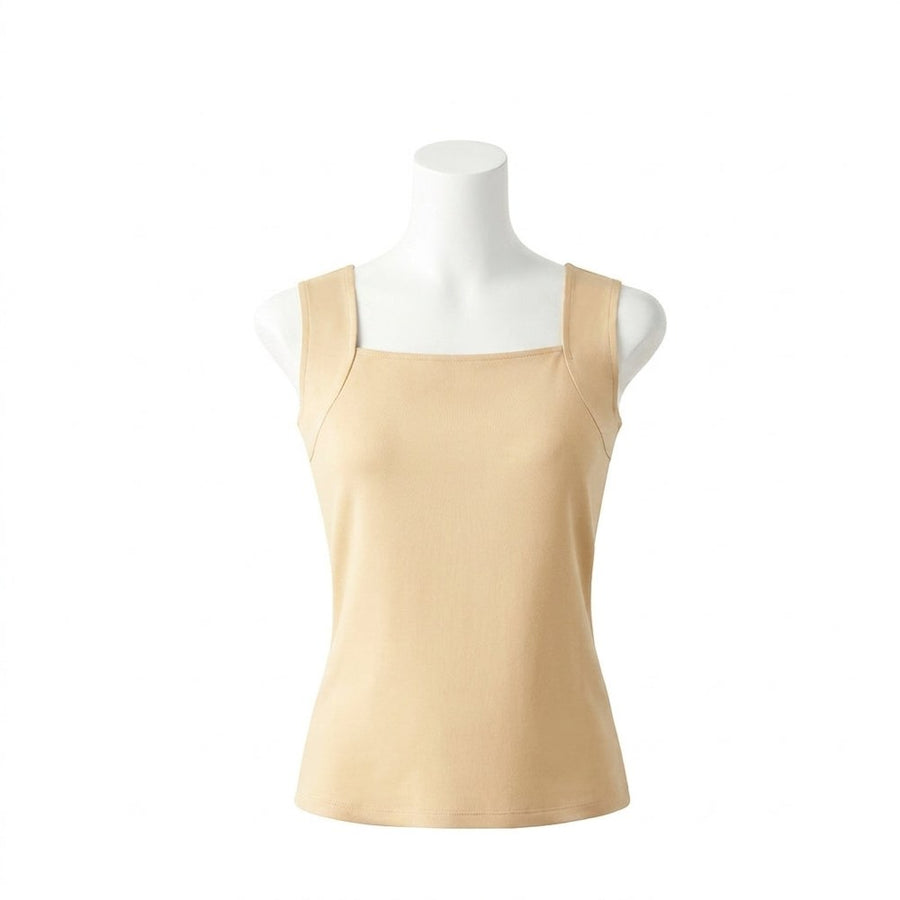
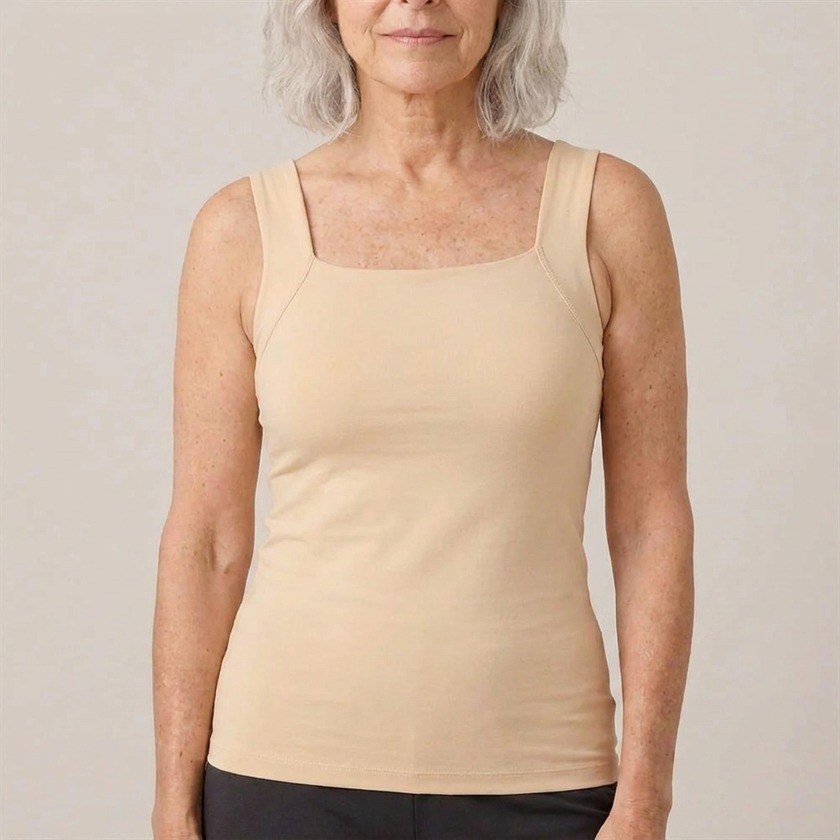
A built-in bra tank: the same weight, spread across all of you. Shoulders, ribs, sides and waist share the load. No single point carries it, so no single point has anything to dig into.
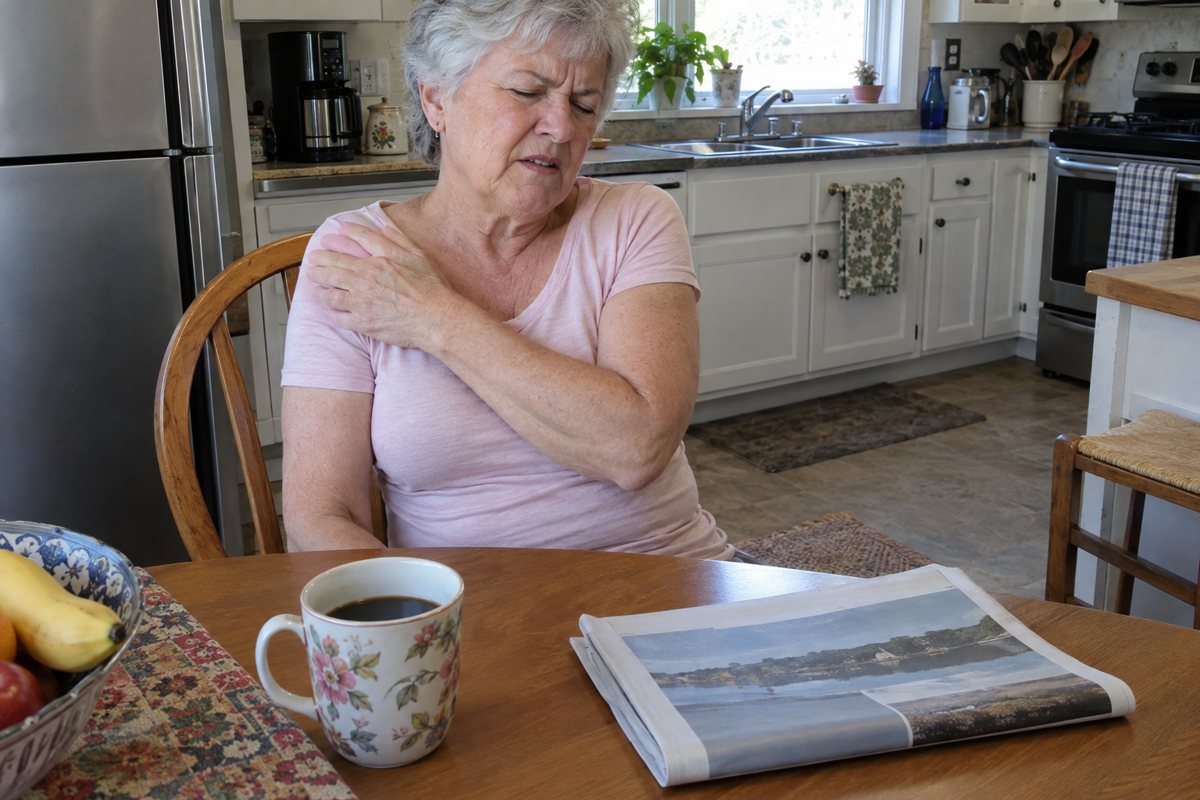
Pick up any bra you own and look at what is actually carrying the weight. Two straps. One band that pulls tightest at your sides. Four narrow strips of fabric, each about an inch wide.
That is the entire structure.
At thirty, with firmer tissue and thicker skin, you can wear that arrangement for fourteen hours and barely notice. At sixty-five, you cannot. The same four points are now pressing into softer tissue and thinner skin, and they leave evidence. The grooves in your shoulders, the red line at your sides, the wire that has quietly migrated off your ribcage and onto tissue where it was never meant to sit.
Once you see it that way, the last decade makes a great deal more sense.
Why nothing you tried worked
Look at the usual fixes through that lens:
- Go up a band size. Looser band, less digging, for about a week. Still four points.
- Buy a soft bralette. Comfortable for three hours, then everything has flattened. Still four points.
- Buy a more expensive bra. Better fabric, nicer finishing, a fitter who knows her trade. Still four points.
- Give up on bras entirely. Genuinely comfortable, until the doorbell rings. No support at all.
Every one of those changes the materials. Not one of them changes the architecture.
A different question
A handful of designers eventually asked the obvious one. Not how do we make four pressure points more comfortable, but why are there only four?
The answer turns out to be habit. A bra is built as a separate garment worn under a top, so the support has to hang from something small. But if the support is built into the top rather than strapped on underneath it, the weight does not have to hang from four narrow strips at all. It can be carried across the whole torso, shoulders, ribs, sides, waist, spread over hundreds of square inches instead of concentrated on four.
Same weight. No single point taking the load.
Nothing to unhook at five o’clock, because nothing has been digging in since nine.
An honest warning: most of these are bad
This matters more than anything else on this page.
The category is called a built-in bra tank, and the shops are full of cheap ones. Most of them are useless. They have a single thin layer of jersey sewn across the chest, a “shelf bra” in name only. Women buy one, discover they still need a bra underneath it, and reasonably conclude the whole idea does not work.
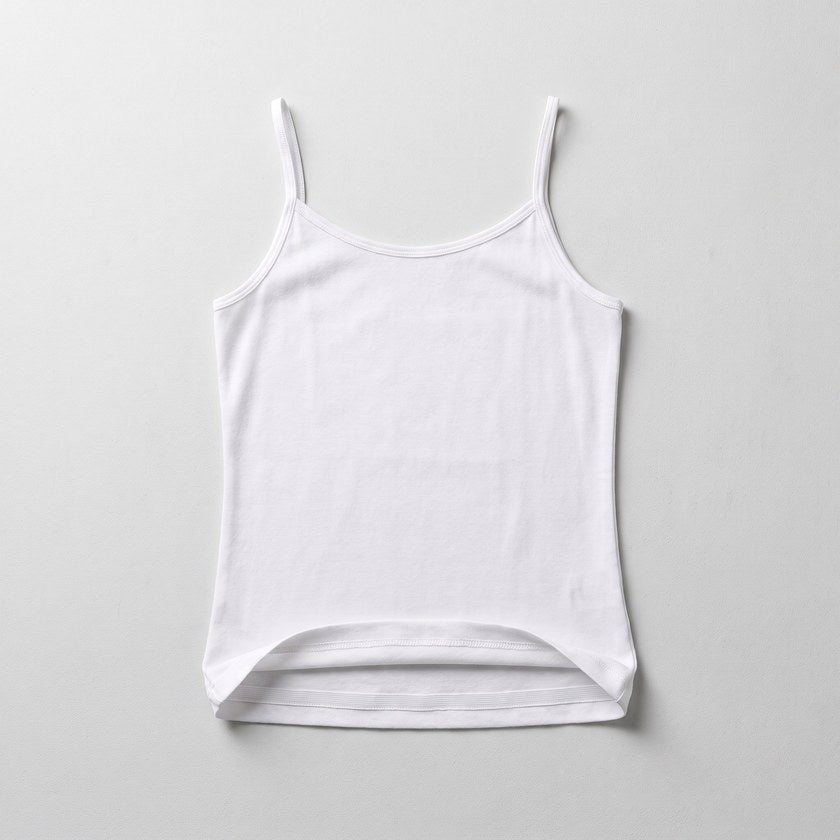
The idea works. Thin fabric doesn’t. Spreading a load requires structure to spread it with.
Three things separate a real one from a cheap one:
1. Real cups, not a strip. Molded cups built into the front, not a strip of lining sewn across it. This is what actually holds.
2. A snug body that does the holding. The fabric itself carries the weight, from the chest all the way down, so the cups are not hanging from the straps alone.
3. Length. Cut long, past the hip, so it tucks in. That is what stops the hem rolling up when you walk.
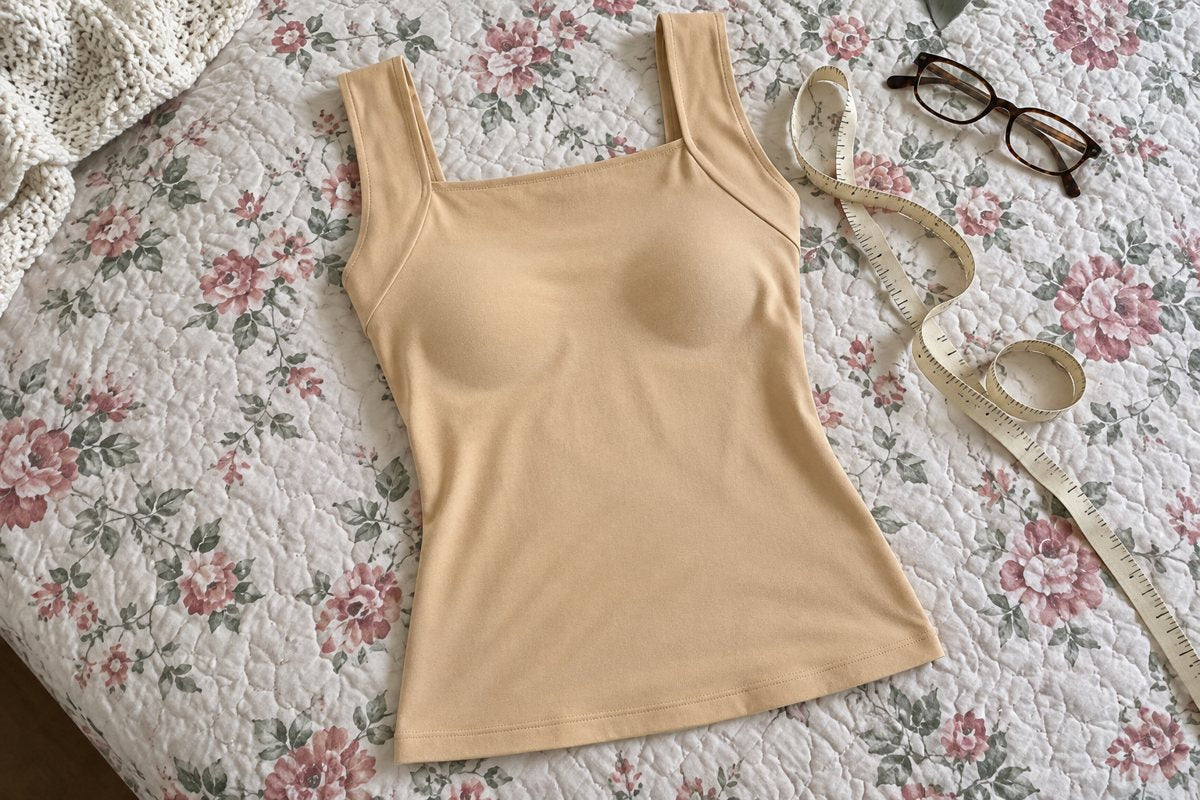
Susie’s Built-in Bra Comfort Tank was built around those three. It is made from an 80% nylon, 20% spandex knit, a four-way stretch fabric with no wire, no hooks and no back closure of any kind. It goes on in one motion, over your head or stepped into from the floor, whichever you find easier.
The questions women actually ask
“Will it really support me?”
For most women through a normal day, errands, church, sitting with the grandchildren, a long afternoon out, yes. The difference is that the support is spread rather than concentrated, which is why it does not announce itself the way a band does.
A fair caveat, because you deserve one: if you are fuller-busted and heading out to garden hard for four hours, treat this as a comfortable everyday support layer, not a replacement for a purpose-built high-support bra. It is honest about what it is.
“Will it roll up when I walk?”
It is cut past the hip and tucks in. Once it’s tucked, it’s held down at your hips, and there is no band around your ribs to creep up. That band is the part that usually causes the roll on shorter camisoles.
“Will it be too tight? I cannot stand feeling squeezed.”
Spreading a load is the opposite of squeezing one. There is no band, no wire and no hook. The entire point of the construction is that no single part of it grips. The knit has four-way stretch, so it moves when you move rather than holding a fixed shape against you.
“Will it show under a white blouse?”
There is no band and no clasp, so there is no line across your back and no hook bump to press through. The molded cups give you shape and cover in front.
“Can I get it on by myself?”
Yes. Over the head or stepped into from the floor, whichever is easier on your shoulders that morning. There is nothing to fasten and nothing to reach behind you for.
“How do I wash it?”
The molded cups are built in, so there is nothing to take out first. Wash it and lay it flat to dry. Check the care label on yours. Nothing special.

“What if I order the wrong size?”
Susie’s ships the correct size free, and you keep the first one. Nothing to send back. You have 90 days from delivery.
What customers say

Barbara, 69, size 2XL (wears a 40DD):
“My old bra was halfway up my back by the time I got to the grocery store. This one stays put if I tuck it in my slacks. It doesn’t lift me like my underwire did. It just stays where it is, which is what I wanted.”

Carol, 71, size L:
“Tucked in it stays down all day. Untucked it creeps up when I bend over, so I tuck it. Took me a couple days to stop reaching back for a band that isn’t there.”
Trying it without taking a risk
S through 6XL, in eight colors. Most women order more than one once they know the size works, so right now, buy two and the third one is on the house.
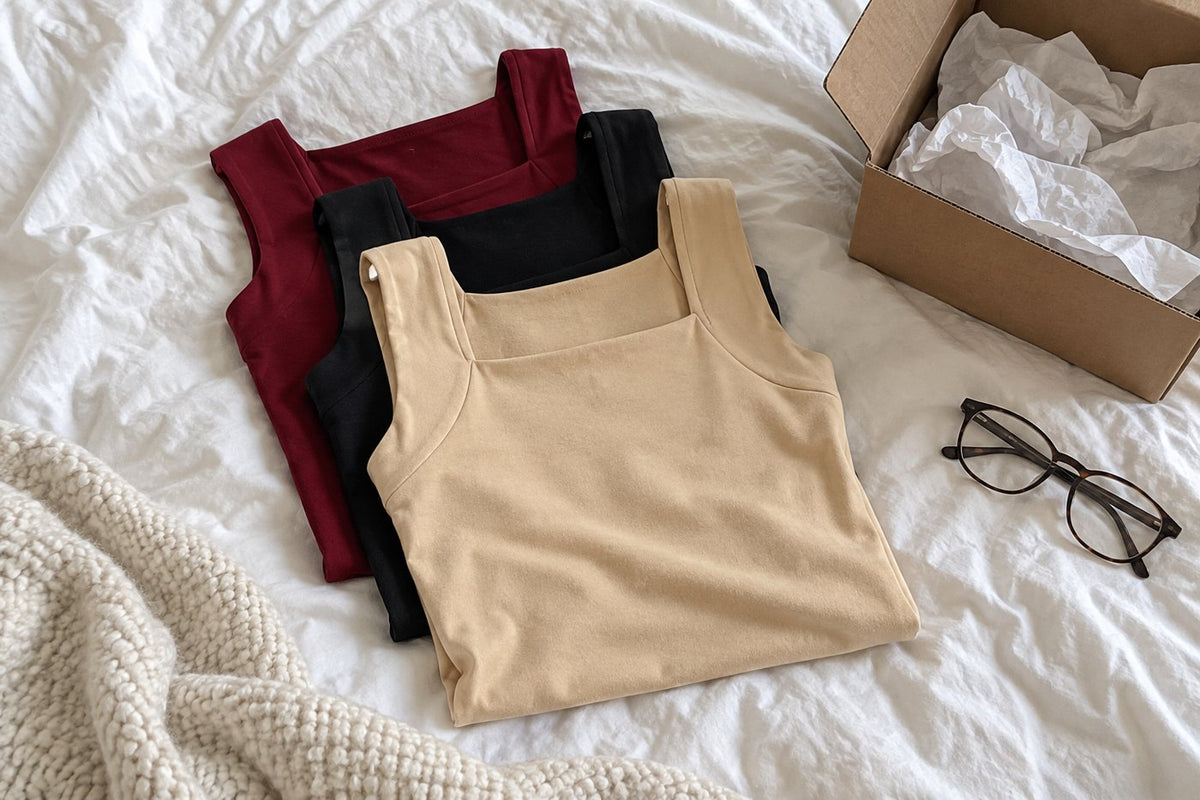
- Free size correction. We ship the right size and you keep the originals, no return required.
- Free shipping on every US order.
- Eight colors · sizes S to 6XL · cut long for longer torsos.
The 90-Day Perfect Fit Guarantee. Wear it for ninety days. If the size isn’t right, we send you a new size free, and you keep the first one.
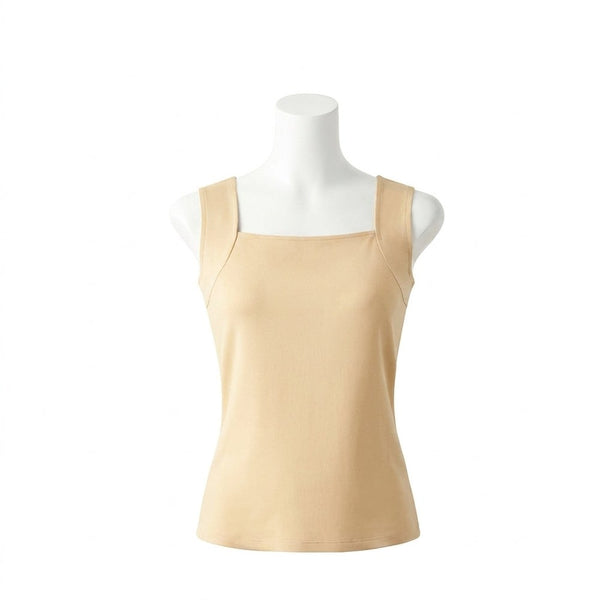
Susie’s Built-in Bra Comfort Tank
Buy 2, Get 1 Free · Free US shipping
- No band, no wire, no hooks, no back closure
- Weight spread across your whole torso, not four narrow points
- Molded cups built in
- Cut long, tucks in so it won’t roll up
- Sizes S to 6XL, eight colors
90-Day Perfect Fit Guarantee. Wrong size? A new size free, keep the first one.
Claim Buy 2, Get 1 Free →Secure checkout · 90-Day Perfect Fit Guarantee
The short version
Your bras did not stop working because something went wrong with you.
They stopped working because your tissue softened and your skin thinned, while the bra kept holding all of you in the same four narrow places it always did.
Spread the weight instead of concentrating it, and the countdown to five o’clock simply stops.